Beijing International Expo Garden
Beijing, China
Developed with Counts Studio, Brooklyn, NY
A Project Story
The Path Garden for the Beijing International Masters Garden began in an unexpected way, shortly after I founded Counts Studio in Brooklyn. A visiting group from Beijing, who had toured the ASLA Headquarters Green Roof, inquired about the project’s design team and were directed to me. Soon after, they ask to visit my studio in Brooklyn to discuss a potential opportunity, which I later understood to be part of a larger international selection process involving leading landscape architects such as Diana Balmori, Peter Walker, Peter Latz, and Toru Mitani. We developed a proposal and were ultimately selected to participate.
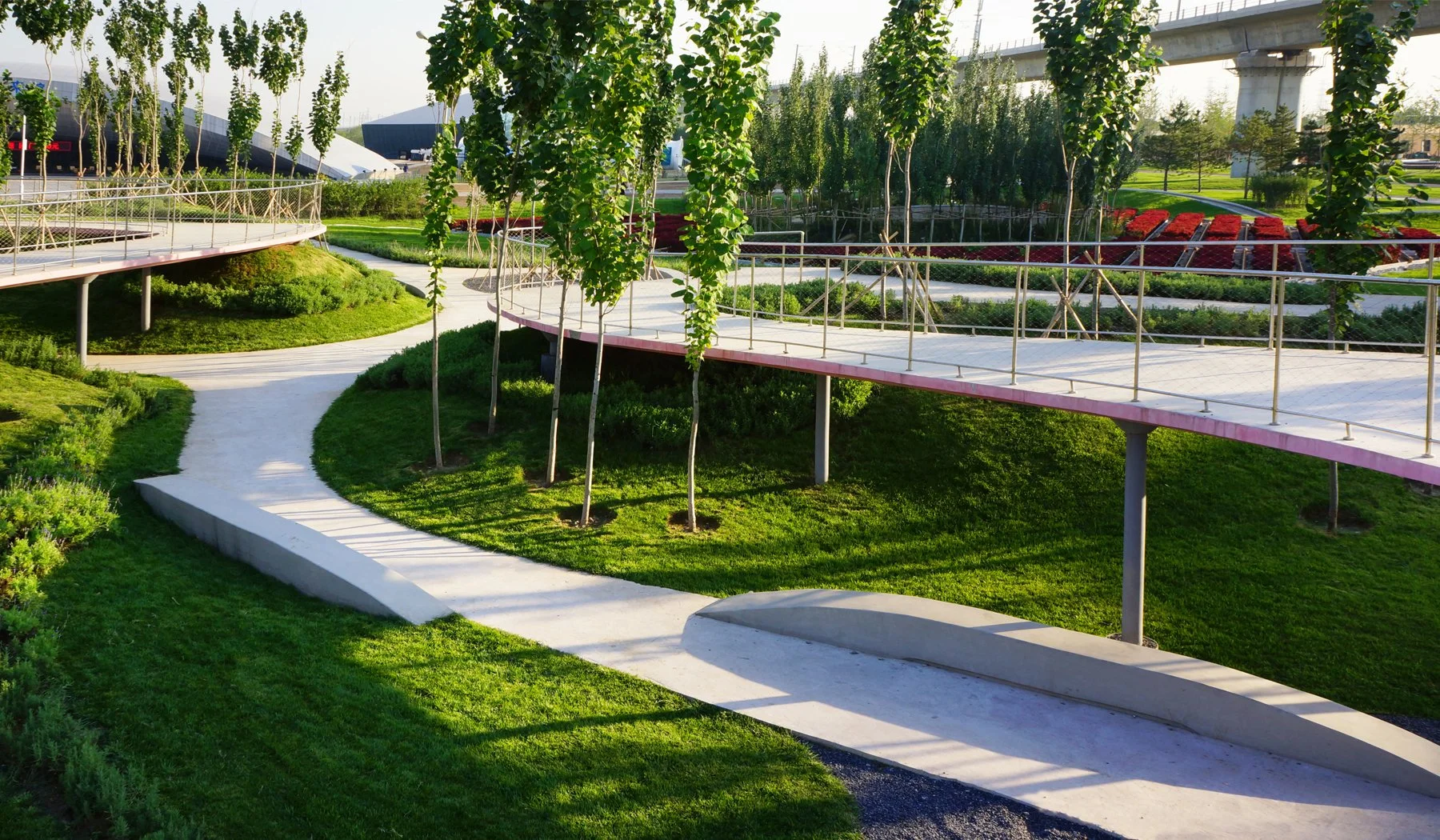
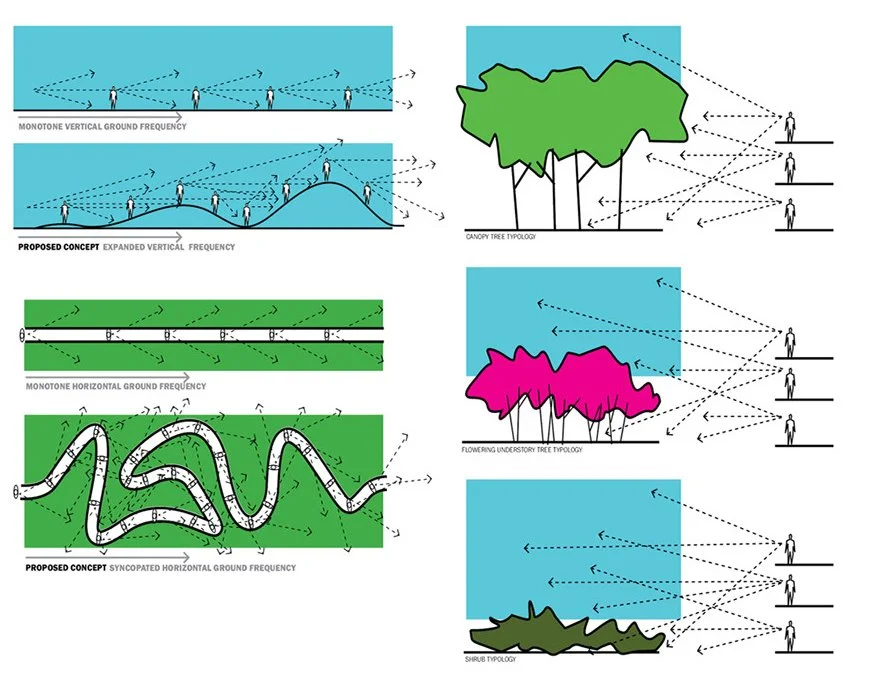
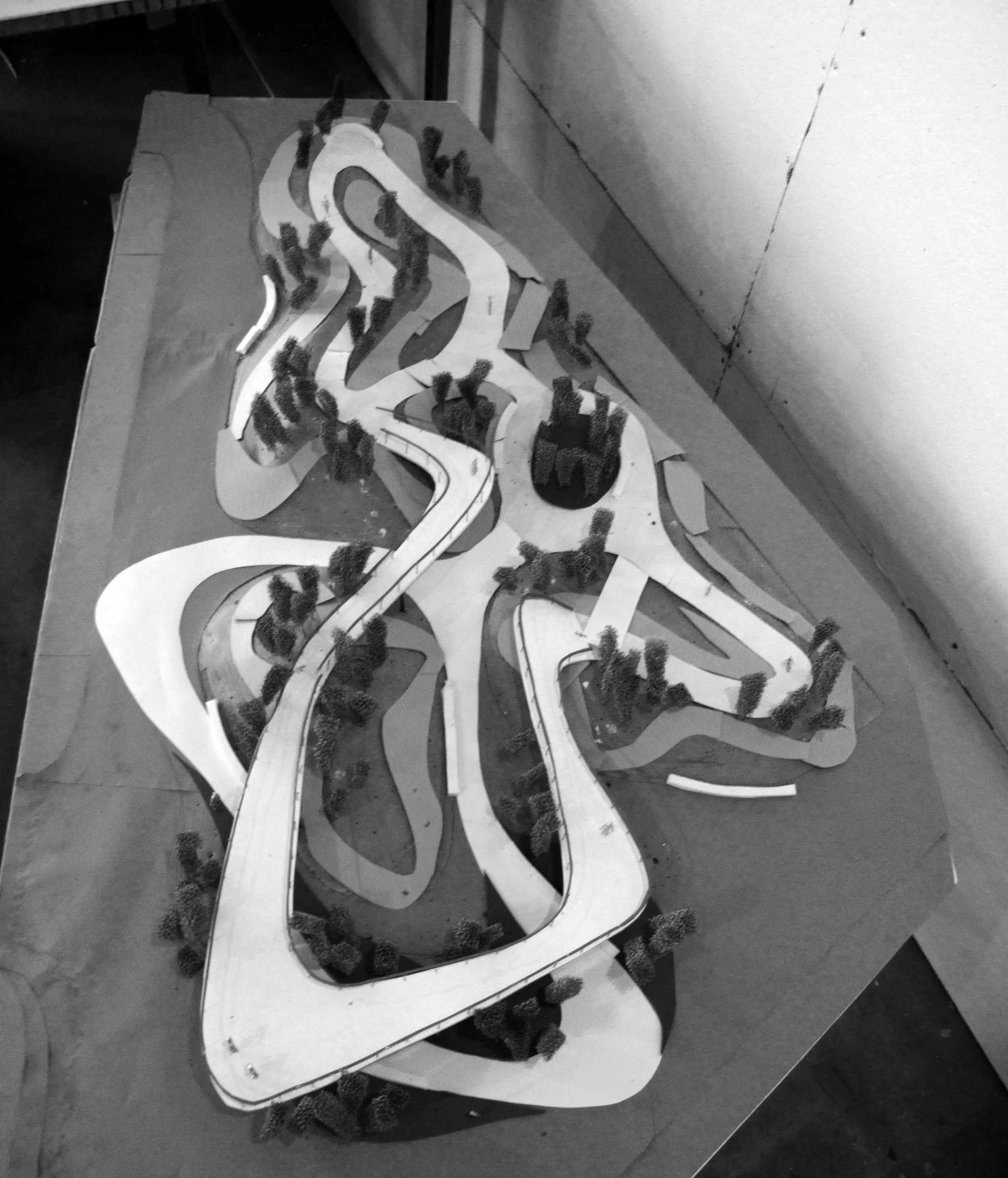
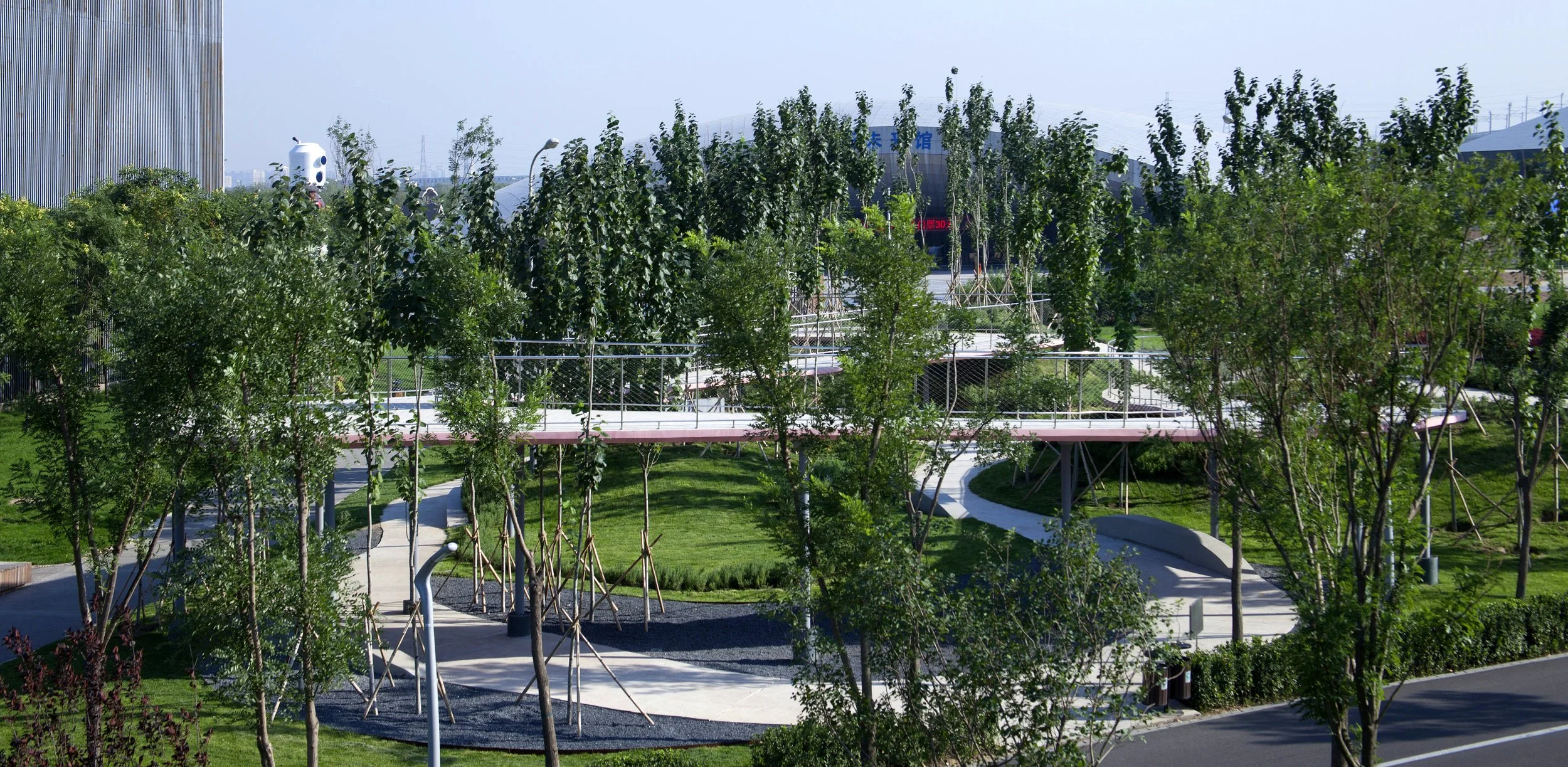
Entering the project alongside such accomplished designers, I approached the work by focusing on what I understood best: topography, movement, and the experiential potential of circulation. With the site located adjacent to Peter Walker’s garden, I was particularly interested in how the project could both hold its own as a self contained space and engage visually with its neighbors. That led to a central idea of creating a garden that oscillates between inward oriented and outward oriented experiences, at times enclosing the visitor and at others opening outward to frame views of adjacent works. At its highest point, the garden becomes a place of observation, even imagined as a shared vantage point from which to appreciate the surrounding gardens.
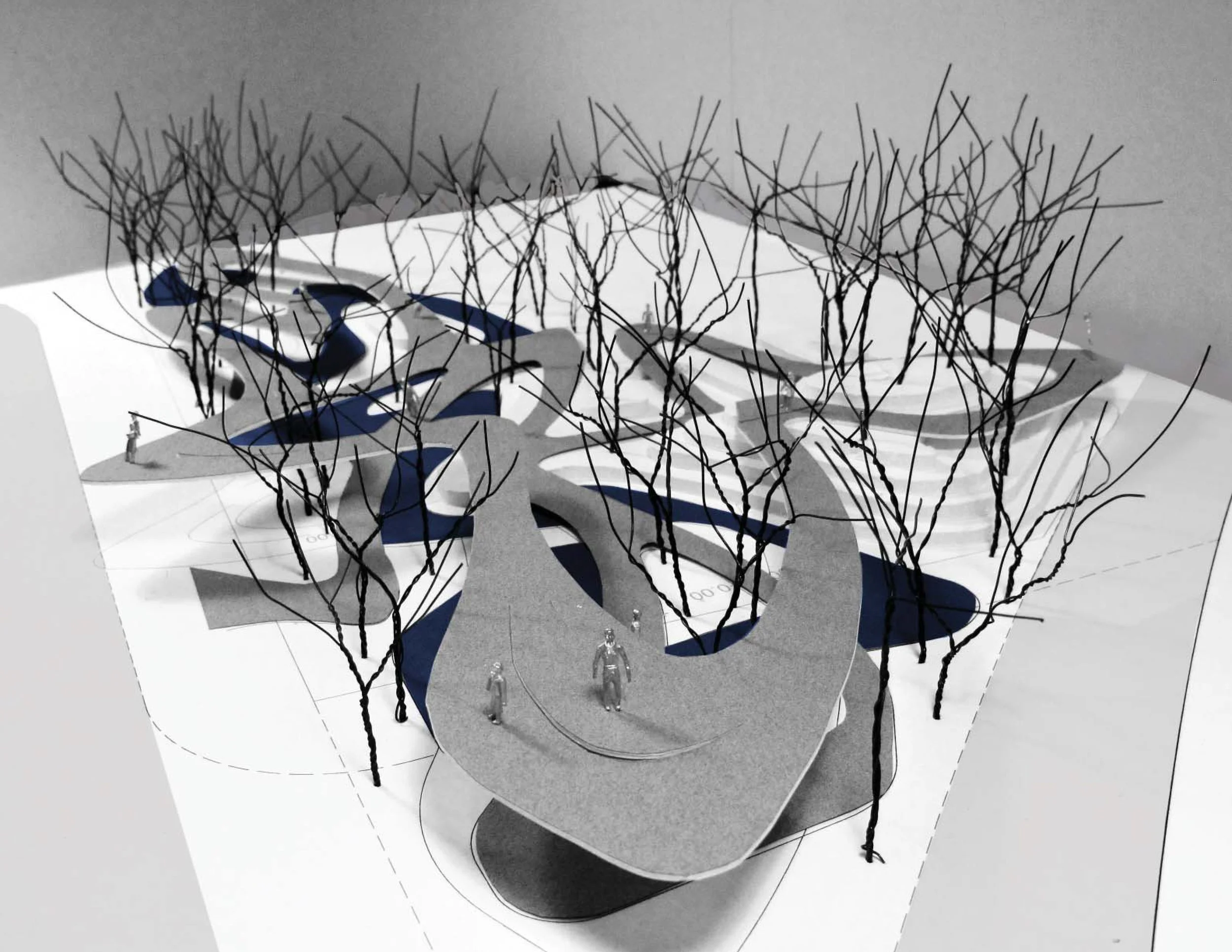
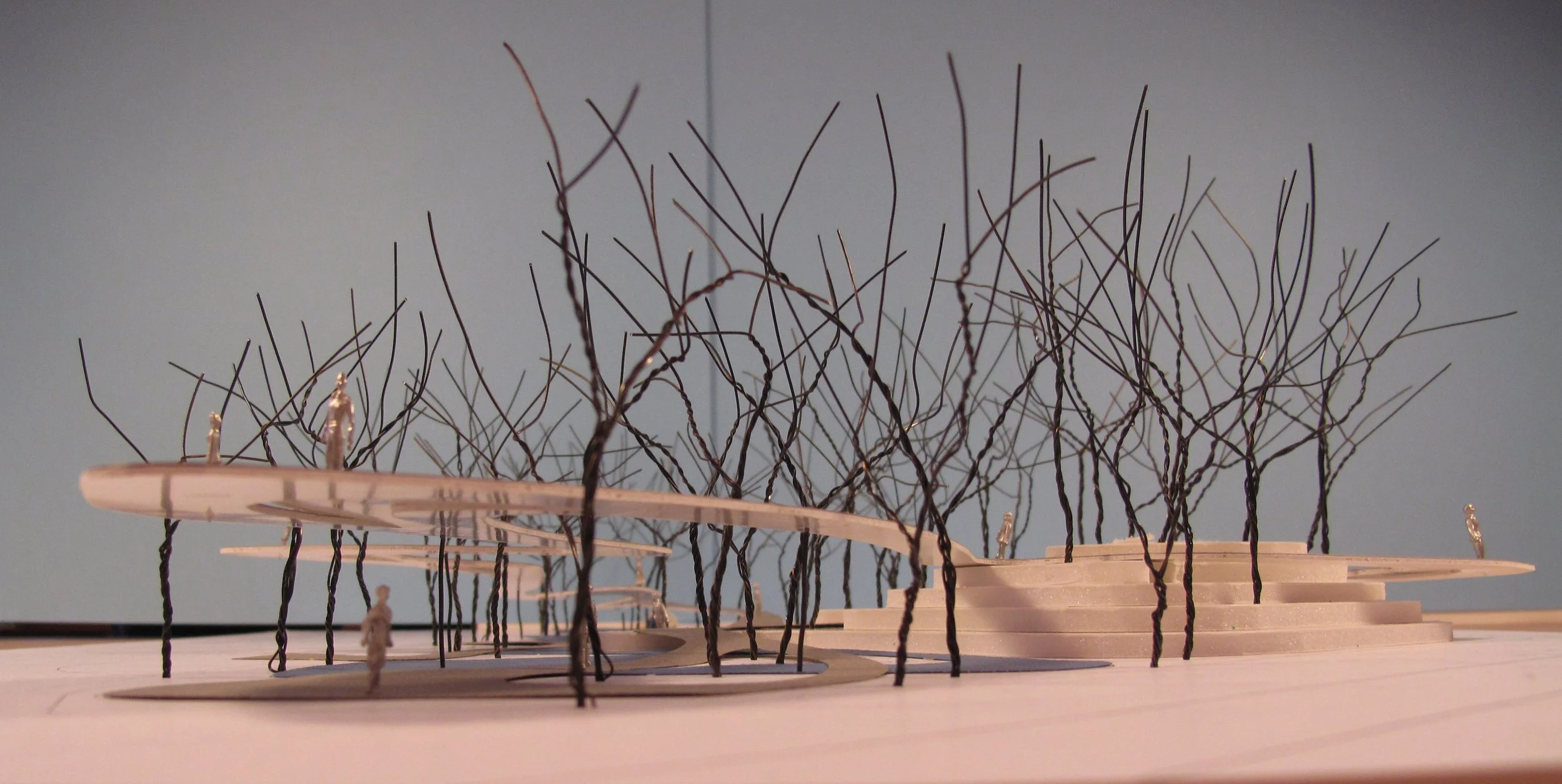
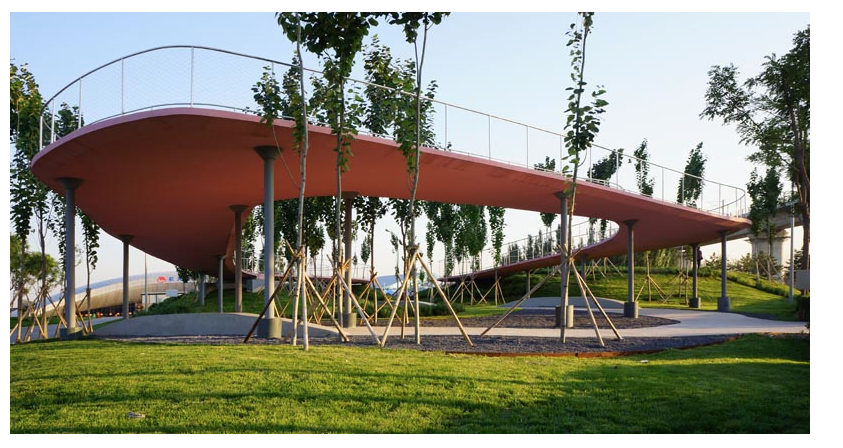
The design developed through a system of compressed and overlapping paths that rise gradually through the landscape, maintaining accessible slopes while lifting visitors into the tree canopy. Movement operates in two dimensions simultaneously: in plan, the path shifts back and forth, while in section it rises and falls, creating a continuous recalibration of views and spatial relationships. This integration of circulation, structure, and landform became both the organizing strategy and the experiential engine of the project. During the design process, we also benefited from the perspective of Julie Bargmann, a leading landscape architect and professor at the University of Virginia, who visited the studio with her students and served as a critic, offering valuable insight particularly on tree selection and the spatial choreography of the garden. Critical to realizing the project was the involvement of Silman as structural engineer, who contributed their expertise on a pro bono basis and played an essential role in making the project feasible.
As an expo garden, the program was intentionally minimal, allowing the project to exist somewhere between landscape, garden, and installation. This simplicity enabled a focus on spatial sequencing, perception, and the relationship between the individual garden and the larger exhibition context. The result is a highly distilled intervention that has been widely published and recognized for its clarity and innovation.
The project became an early exploration of ideas that have continued to influence my work, particularly the integration of infrastructure and landscape as a unified system. It also reinforced the value of working within one’s strengths while remaining responsive to context, and demonstrated how even a modest, constrained project can contribute to broader conversations about new garden typologies and the future of landscape architecture.